NBA Three-Point Shooting Trends and Their Impact on Betting Lines
 Available in US

The Three-Point Revolution Has Rewritten How Books Set Lines
I remember a time when a team attempting thirty threes in a game was considered reckless. Now it is Tuesday. The 2025-26 season has pushed three-point volume to levels that would have seemed absurd a decade ago, and the ripple effects on betting markets are enormous. Team pace and shooting efficiency have become the dominant inputs bookmakers use to set totals lines, and if you are not factoring three-point trends into your NBA analysis, you are working with an incomplete picture.
The shift is not just about volume — it is about what volume does to variance. A team that takes 45 threes in a game is essentially running 45 mini-coin flips, each with a payout of three points rather than two. When those shots fall, scoring explodes and totals sail over. When they do not, the game grinds to a halt and the under cashes comfortably. That variance is the key concept for bettors, because it means three-heavy teams produce wider score distributions than teams that attack the basket, and wider distributions create more opportunities for the market to misprice outcomes.
The old models priced NBA games around field goal percentage and free throw rate. Modern models must weight three-point attempt rate, three-point accuracy, and the interaction between a team’s shooting volume and its opponent’s perimeter defence. Bookmakers have adapted, but the adaptation is a work in progress — particularly on player props, where shooting-volume trends create exploitable gaps between the line and the likely outcome.
Three-Point Volume and Accuracy Across Recent Seasons
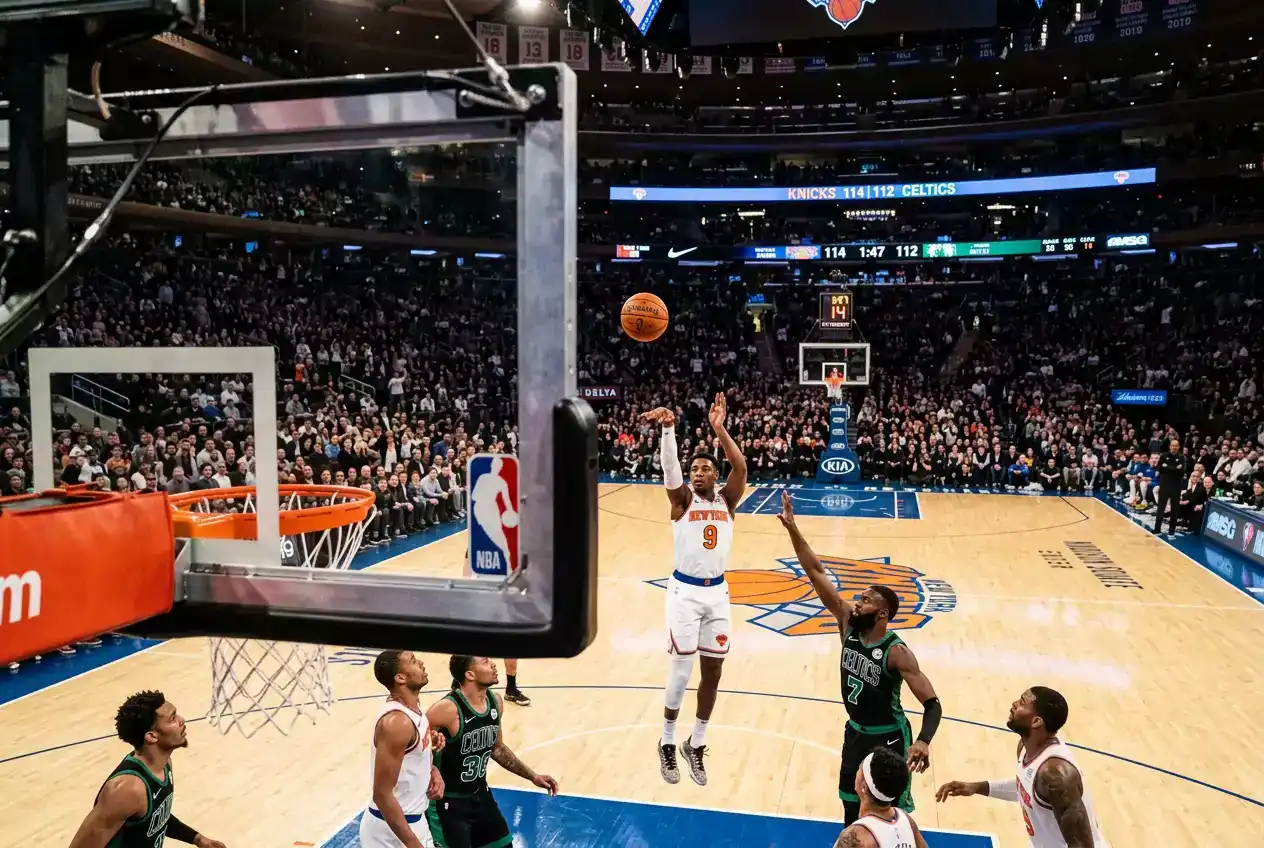
When I built my first totals model in 2018, the league average was around 32 three-point attempts per game. By the 2024-25 season that number had crept past 37, and the 2025-26 campaign shows no sign of retreating. What matters for betting is not just the league average but the spread between teams at the extremes. The gap between the highest-volume and lowest-volume three-point teams is now roughly 15 attempts per game, which translates to a scoring-range differential of 5 to 8 points per contest. That spread creates matchup-specific opportunities that a single league-wide adjustment cannot capture.
Accuracy has been more stable. League-wide three-point percentage hovers between 35% and 37% year to year, with individual teams ranging from the low 33s to the high 38s. The stability of accuracy means that volume is the variable that drives most of the variation in three-point scoring between teams. When I model a game’s expected total, I weight three-point attempt rate roughly twice as heavily as three-point accuracy, because attempt rate varies more and is more predictable game to game.
One trend I have tracked with particular interest is the relationship between three-point volume and early-season performance. Teams that significantly increase their three-point attempt rate from one season to the next tend to run hot or cold in the first 15 to 20 games as they adjust to the new offensive philosophy. Totals lines during this adjustment period are often set using last season’s data, creating a window where the current reality diverges from the market’s expectations.
Why Three-Heavy Teams Create Wider Score Distributions
This is the concept that changed how I think about NBA totals. A team that scores 110 points by shooting 50% on twos and 35% on threes will produce that 110 in a tighter band of outcomes than a team that scores 110 by shooting 44% on twos and 38% on threes at higher volume. The second team’s scoring is more dependent on whether the threes fall, and that dependence widens the range of plausible game scores.
Wang and colleagues’ research found that 19% of NBA games remain within ten points entering the fourth quarter. That figure masks enormous variation between game types. When two three-heavy teams meet, the fourth-quarter margin distribution is wider — more blowouts and more comebacks — than when two mid-range-oriented teams play. This matters for spread betting because wider distributions mean the favourite is more likely to both blow the opponent out and lose a close game. The spread becomes a less reliable predictor when three-point variance is high.
For totals, the implication is directional. Three-heavy matchups produce more extreme outcomes on both sides of the line. The average might land near the posted total, but the individual game is more likely to miss the number by a wide margin. I use this insight to avoid over-totals in three-heavy matchups when the line is already inflated. The market is aware that these teams score, but it sometimes underprices the probability of a shooting slump that drops the total ten or fifteen points below expectations.
Totals, Spreads and Prop Angles Tied to Shooting Trends
My bread-and-butter three-point angle is the totals market in pace-mismatch games. When a high-volume three-point team faces a slow-paced, defence-first opponent, the market often splits the difference and posts a total that is too high. The defensive team controls pace — they dictate the number of possessions — and the offensive team’s three-point volume is suppressed by fewer opportunities rather than better defence. I lean towards unders in these matchups, particularly when the defensive team ranks in the top ten for opponent three-point attempt rate.
On the spread side, three-point variance creates opportunities around key numbers. A team that lives and dies by the three is more likely to produce a result that lands far from the spread rather than right on it. If my model projects a six-point win but the team’s three-point dependence widens the distribution, I might pass on the spread entirely and look at the moneyline instead, where the wider distribution matters less because I only need the team to win, not win by a specific margin.
Player props linked to three-point shooting are where the most consistent value lives. Three-pointers-made props are high-variance by nature — a player who averages 3.2 made threes per game might make zero one night and seven the next — and bookmakers set the line based on averages that smooth out the volatility. When I identify a matchup where a shooter faces a bottom-tier perimeter defence, his probability of exceeding the line shifts meaningfully, but the bookmaker’s average-based model does not always capture the matchup-specific boost. These props require patience and selective wagering, but the edge is real and recurring.
Do three-point-heavy NBA teams hit the over more often?
Not necessarily. Three-point-heavy teams produce wider score distributions, which means they are more likely to produce extreme outcomes on both sides of the total. When their shots fall, the over hits easily. When they go cold, the under cashes by a wide margin. The overall over rate for three-heavy teams is close to league average, but the variance around the total is significantly higher.
How does three-point variance affect NBA spread outcomes?
High three-point variance widens the distribution of game outcomes, making it more likely that the result lands far from the spread rather than close to it. This means three-heavy teams are less predictable against the spread and produce more blowouts and unexpected close games. Bettors should factor this variance into their confidence levels when placing spread bets involving high-volume shooting teams.
Published by the Betting Tips nba team.