NBA Live Betting Strategy: In-Play Market Edges
 Available in US
- In-Play Betting Markets: Exploiting Live NBA Odds
- How NBA In-Play Lines Are Set and Re-Set
- Fourth-Quarter Fatigue: The Live Bettor’s Best Friend
- Momentum Runs and Scoring Droughts: Timing Your Entry
- Which UK Platforms Handle NBA Live Betting Best
- Cash-Out Decisions: When to Lock Profit on an NBA In-Play Bet
- Emotional Control in Fast-Moving NBA Markets
- Frequently Asked Questions
In-Play Betting Markets: Exploiting Live NBA Odds
The first time I placed a live NBA bet was a disaster. I was watching a game go sideways — the team I had backed pre-game was down 14 in the second quarter — and I doubled down on the live spread in a panic. They never recovered. I lost two units instead of one, and the only thing I gained was a very expensive lesson: live betting without a framework is just chasing losses in real time.
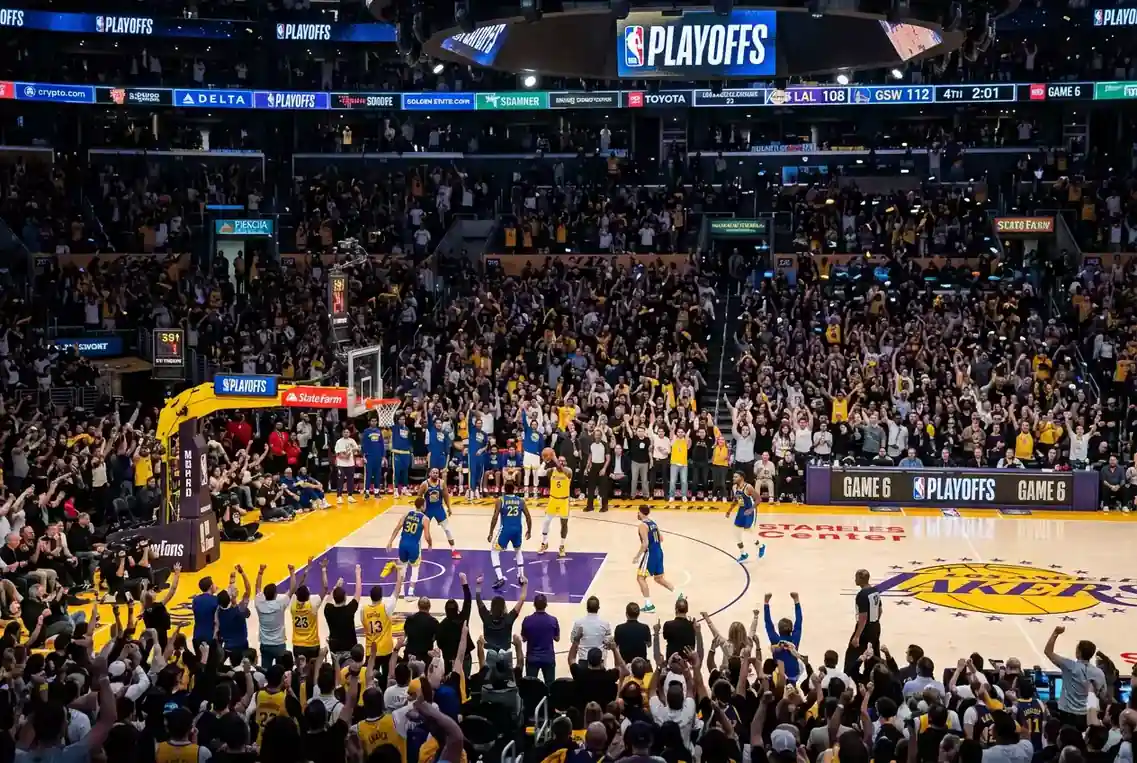
That was seven years ago. Since then, in-play betting has gone from a niche feature to the dominant form of online wagering globally. The numbers are difficult to ignore — live bets now account for 62.35% of all online betting revenue worldwide, and that share is growing at a compound annual rate of 13.62% with no signs of slowing. The NBA is one of the sports driving that shift because basketball’s structure — four quarters, constant lead changes, natural stoppages for timeouts and free throws — gives operators frequent opportunities to reprice lines and bettors frequent windows to act.
For UK punters, the appeal of NBA live betting is partly practical. Most games tip off between 11pm and 1:30am British time. If you are watching a game, you are already engaged. Placing a live bet feels like a natural extension of that engagement. The challenge is converting that engagement into disciplined analysis rather than impulsive wagering. Every section in this piece is designed to give you a framework that keeps emotion out and lets data do the work.
I will be direct about something else: live betting carries wider margins than pre-game betting. Operators need to protect themselves against the risk of pricing errors in real time, so the overround on in-play spreads and totals is typically 1-3% larger than the pre-game equivalent. That margin tax means you need to be more selective with live bets, not less. I place roughly three live NBA bets per week during the season, compared to eight or ten pre-game wagers. The edge per bet is larger, but the frequency is lower, and that trade-off is deliberate.
In-play markets move rapidly, requiring bettors to rely on NBA advanced stats to spot value before the algorithms adjust.
How NBA In-Play Lines Are Set and Re-Set
Imagine the bookmaker’s pricing model as a speedometer recalibrating every few seconds. Before tip-off, the pre-game spread reflects all available information: team strength, injuries, rest, home court. Once the ball goes up, that model starts absorbing live inputs — current score, time remaining, possession, foul count, and increasingly, player tracking data — and spitting out updated lines at a pace that would have been impossible a decade ago.
The NBA has leaned into this aggressively. The league sells a fourth-quarter streaming pass for $1.99, a product that exists almost entirely because of live bettors. If the league is monetising the final 12 minutes as a standalone product, you can be certain that the in-play betting market around those minutes is enormous. That final quarter is where the most volatile live line movements occur and where the sharpest edges appear — and disappear — within minutes.
Live lines re-set during every dead ball: timeouts, free throws, end-of-quarter breaks, and official reviews. During live play, most operators either suspend betting or offer a narrow window of accepted wagers with a slight delay built in. That delay — typically 3 to 8 seconds — exists to protect the operator against bettors who are watching a live broadcast and can see a dunk before the model updates the line. If you are betting through a UK app, your feed may lag behind the actual game by 10-15 seconds, which means the operator’s model has already repriced before you even see the play. This latency disadvantage is real, and it is one reason I favour dead-ball windows over mid-play betting.
The key distinction for live bettors is between reactive and predictive strategies. A reactive bettor waits for something to happen — a big run, an injury, a key player picking up his fourth foul — and then bets on the market adjusting to that event. A predictive bettor identifies situations where the live line has not yet fully absorbed an expected shift and bets before the market catches up. Both approaches work, but they require different skill sets. Reactive betting demands speed and access to fast data. Predictive betting demands deeper knowledge of game flow, coaching tendencies, and fatigue patterns. I lean heavily toward the predictive side, which is where the next two sections take us.
Fourth-Quarter Fatigue: The Live Bettor’s Best Friend
Every NBA game has a moment when the wheels start to come off for one team. Sometimes it is a star player visibly gassed on defence, failing to close out on shooters he tracked tightly in the first half. Sometimes it is a bench unit that gets outscored 12-2 in two minutes. The fourth quarter is where fatigue collides with stakes, and the results are the most exploitable patterns in live betting.
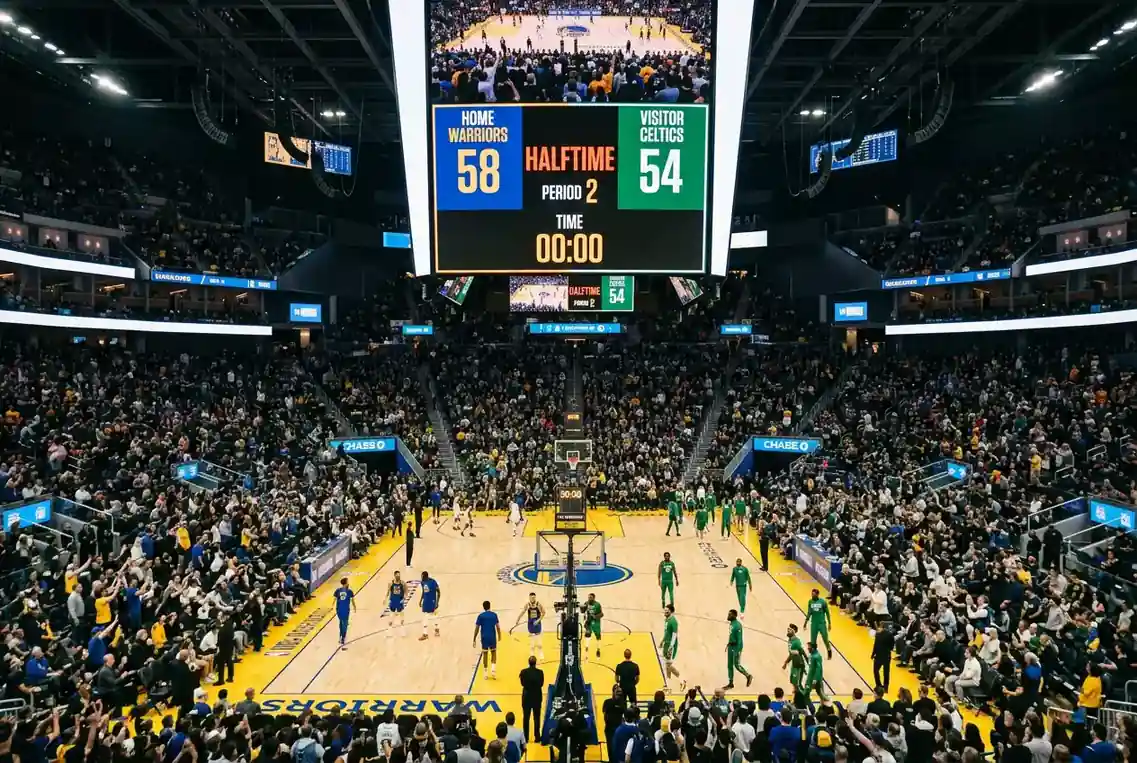
Academic research backs this up with hard numbers. García et al. measured physical performance decline across NBA quarters and found an effect size of -1.27 between the first and fourth quarters — a substantial drop in output metrics including sprint speed, defensive intensity, and vertical leap. Players do not just feel tired in the fourth quarter; they measurably perform worse. And Wang et al., studying 2,295 games over a decade, documented that 19% of NBA games remain within 10 points entering the fourth quarter. One in five games is still genuinely competitive heading into the period where fatigue has the largest impact. That intersection — close game plus fatigue — is where live betting edges concentrate.
My approach is specific. I track which teams rely heavily on their starting five versus which teams have a deep bench that keeps starters’ legs fresh. When a team with a short rotation — seven or eight players getting meaningful minutes — enters the fourth quarter of a close game on the second night of a back-to-back schedule, their live spread often does not fully reflect the fatigue tax they are about to pay. The bookmaker’s model knows the team is on a back-to-back, but it may not weight the compounding effect of a close game that has forced the coach to ride his starters for 36-plus minutes through three quarters.
The pattern I exploit most often: a fatigued team holding a narrow lead entering the fourth quarter. The live spread will show them as a small favourite, reflecting their current lead. But the probability that they sustain that lead through 12 minutes of heavy fatigue is lower than the live price implies. I back the fresh-legged opponent’s fourth-quarter spread in these spots and have found it to be one of my most consistent live angles over four seasons of tracking.
One caution: this pattern weakens in the playoffs. Postseason rotations tighten, but star players also access a motivational gear that partially offsets fatigue. Regular-season fourth-quarter fatigue is a far more reliable live betting angle than its playoff counterpart.
Momentum Runs and Scoring Droughts: Timing Your Entry
A team goes on a 14-0 run in four minutes. The arena is rocking. The live spread has swung five points. Your instinct screams: bet the team on the run. That instinct is wrong more often than it is right, and understanding why is the difference between a reactive bettor and a profitable one.
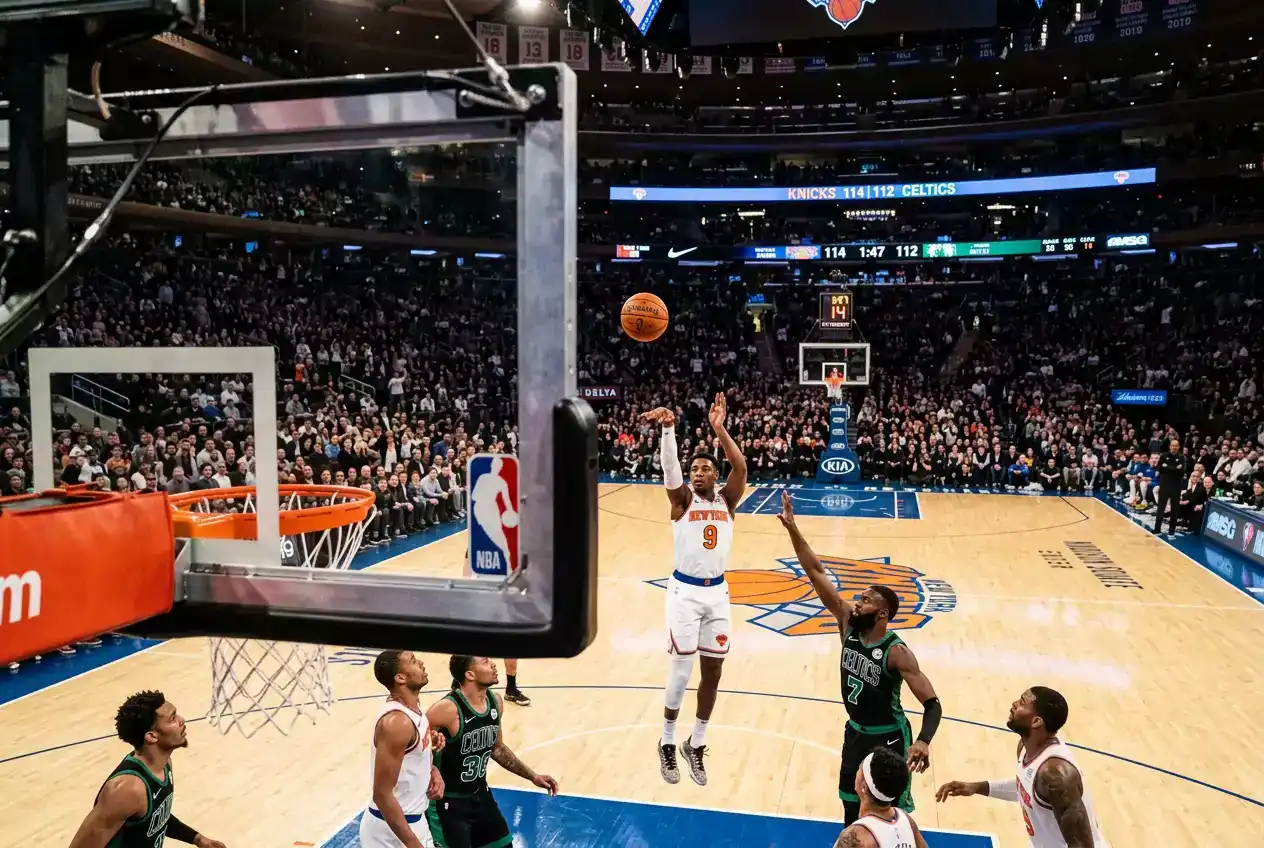
NBA scoring runs are mean-reverting. A 14-0 run does not signal that one team has permanently seized control. It signals that one team hit a hot patch — often driven by three-point variance — while the other went cold. Three-point shooting dominates the modern NBA, and the inherent streakiness of long-range shooting drives most of the dramatic in-game swings you see. A team that has just scored 14 unanswered points is not 14 points better than they were five minutes ago. They are, on average, about to regress toward their true offensive and defensive efficiency levels.
The profitable live play is often the contrarian one: betting against the run. If a solid team falls behind by 12 midway through the second quarter because their opponent hit six consecutive threes, the live spread may have overcorrected. The trailing team’s true quality has not changed; only the live scoreboard has changed. If the pre-game spread was -2.5 in their favour and they are now +6.5 on the live market, you are getting 9 points of value relative to the pre-game number. Not all of that value is real — some information has been generated by the actual play — but a meaningful chunk of it is noise, and that noise is your edge.
I use a simple mental model to time my entry: wait for the run to stop, not for the reversal to start. A timeout, a substitution, or a made free throw that breaks the scoring drought is my signal. At that point, the emotional peak of the run has passed and the live line is often at its most extreme. The next few possessions tend to normalise, and the live spread begins correcting back toward the pre-game number. I want to be in the market before that correction takes hold.
Scoring droughts are the mirror image. A team goes four minutes without a field goal and the live line drifts against them. If the drought is happening against a strong defensive team that specialises in forcing low-efficiency possessions, the line movement is justified. If it is happening because a decent offensive team is simply missing open shots, the line is overcorrecting and the over on the remaining game total or the opposing live spread becomes interesting.
Which UK Platforms Handle NBA Live Betting Best
Not every UKGC-licensed operator treats NBA in-play markets with the same seriousness. I found this out during a mid-week game last season when I tried to place a fourth-quarter live spread bet and found the market suspended for the entire final period on one platform, while it was still open and actively trading on another. The gap in live product quality between operators is wider for NBA than for football, and it directly affects your ability to execute the strategies described in this guide.
What separates a good NBA live betting platform from a mediocre one? Four things. Speed of line updates is paramount — if the live spread takes 15-20 seconds to refresh after a scoring play, the line you see is already stale and you are betting blind. Depth of live markets matters too. Some operators offer only live moneyline and spread; others carry live totals, quarter lines, and even live player props. The broader the menu, the more angles you can exploit.
Third, cash-out availability during play is a feature that varies significantly. Some platforms offer full or partial cash-out on NBA live bets; others restrict it to pre-game wagers only. If you plan to use a cash-out strategy — and the next section covers when that makes sense — you need to confirm the feature is active on your chosen platform before the game starts.
Fourth, the latency of the video stream matters if the operator offers one. A stream that lags 20-30 seconds behind the live market means you are reacting to plays that the line has already absorbed. Some UK operators stream NBA games through partnerships with international broadcasters, and the quality and latency of those streams varies. I prefer to use a dedicated sports broadcast feed rather than the operator’s embedded stream for real-time viewing, and I use the operator’s platform purely for execution.
The UK gambling industry generated 16.8 billion pounds in gross gaming yield in the year to March 2025, and operators are investing heavily in live products to capture more of that revenue. Competition is pushing NBA live coverage forward season by season. But the pace of improvement is uneven, and testing a platform’s NBA live product before committing serious money to it is time well spent.
Cash-Out Decisions: When to Lock Profit on an NBA In-Play Bet
Cash-out is the most psychologically loaded button on any betting app. It offers certainty in a world of uncertainty, and that makes it dangerously attractive. NCAA President Charles Baker captured the emotional intensity of modern sports betting when he reflected on how mobile access changed everything — “people just weren’t thinking at that point about how fast this whole thing was going to end up in the palm of your hand.” Cash-out puts that intensity into a single tap. The question is whether tapping it serves your long-term bottom line or just your short-term anxiety.
The mathematical reality is that cash-out values are priced to favour the operator. When a bookmaker offers you an early payout, they are calculating the expected value of your open bet and offering you less than that amount. The discount typically ranges from 3% to 8% depending on the operator, the sport, and the current market volatility. In practice, this means that every time you cash out, you are paying an additional margin on top of the overround you already paid when you placed the bet.
That does not mean cash-out is never correct. It means it should be reserved for situations where new information has genuinely changed the probability of your bet winning, and the cash-out value does not fully reflect that change. If you backed a team’s live spread at +8.5 and their starting centre just left the game with a knee injury, the probability of covering has dropped sharply. If the cash-out offer still reflects the pre-injury probability (because the feature updates slower than the live line), taking the cash makes sense.
I use cash-out in two specific scenarios. The first is when a key injury occurs that my original analysis did not account for and that materially affects the expected margin of the game. The second is when my bet is deep in profit and the remaining game time introduces more risk than the additional potential profit justifies. If I backed a live under at 218.5 and the score is 185 with three minutes left, the under is extremely likely to hit and the cash-out value is close to full return. I might let it ride. But if the score is 205 with six minutes left and both teams are running, the cash-out at 75% of full return removes meaningful risk for a modest cost.
What I never do is cash out because I am nervous. Nervousness is not information. It is a signal that your staking was too aggressive for the situation, which is a bankroll management problem, not a cash-out problem.
Emotional Control in Fast-Moving NBA Markets
Live betting is designed to make you feel urgency. The clock is running. The odds are shifting. The line you liked 30 seconds ago is gone. That sense of scarcity — act now or miss out — is the single biggest threat to disciplined live wagering, and it is built into the product by design.
I manage it with three rigid rules that I never break, regardless of how a game is unfolding. First, I set my live betting budget for the night before the first game tips off. That number is separate from my pre-game bankroll allocation and is typically smaller — no more than three units across all live bets for the entire evening. When it is gone, I watch the games for entertainment, not as a bettor looking for opportunities.
Stay ahead of the game with real-time analysis from the top NBA betting platform in the UK.
Second, I never place a live bet within 60 seconds of a major game event. A dunk, a blocked shot, a controversial foul call, a 10-0 run — all of these spike emotional arousal and degrade decision-making. The 60-second buffer is arbitrary, but it works because it forces a brief pause between stimulus and response. In that pause, I ask myself one question: is this bet in my pre-game plan, or am I reacting to something I just saw? If the answer is the latter, I pass.
Third, I do not live bet after midnight UK time unless I have designated the game in advance as a target. The UK Gambling Commission’s data shows that 2.7% of adult gamblers meet problem-gambling criteria on the PGSI scale, and late-night impulsive betting is a recognised risk factor for developing unhealthy patterns. NBA games finishing at 2am or 3am in London create a perfect storm of fatigue, emotional volatility, and reduced inhibition. If I have not identified a specific live betting angle before the game starts, I treat the late-night broadcast as a pure spectator experience.
Emotional control is not a character trait. It is a system. You build rules, test them, and enforce them mechanically until they become habit. The bettors I know who consistently profit from NBA live markets are not calmer or more zen than anyone else. They just have better systems for preventing their impulses from reaching the bet slip.
Frequently Asked Questions
When is the best moment to place a live bet on an NBA game?
The most profitable live betting windows tend to open during dead-ball situations after a major momentum swing — immediately following a timeout called after a big scoring run, for example. The live line is often at its most extreme at these points, and the subsequent reversion toward the pre-game number creates value. Avoid betting mid-play, when the line may already reflect action you have not yet seen on your stream.
Do NBA live betting odds differ between UK and US bookmakers?
Yes. UK operators typically apply a slightly wider overround on NBA live markets compared to the largest US sportsbooks, partly because NBA live handle is lower in the UK and partly because UK operators have less proprietary NBA data. The difference is usually 1-3% in margin, which makes selectivity even more important for UK-based live bettors.
How does the NBA’s fourth-quarter streaming product affect in-play markets?
The NBA’s $1.99 fourth-quarter streaming pass has increased engagement with the final period, particularly among casual bettors. More viewers means more in-play wagering volume in the fourth quarter, which can improve liquidity and tighten live lines during those final 12 minutes. For experienced live bettors, the influx of casual money can create temporary mispricing opportunities.
Should I use cash-out features on NBA in-play wagers?
Cash-out should be used sparingly and only when new information — such as a key injury or a drastic shift in game flow — has genuinely changed the probability of your bet winning. The cash-out value always includes a margin for the operator, typically 3-8%, so habitual cashing out erodes your long-term profit. Never cash out purely because of nerves; that is a staking problem, not a strategic decision.
Prepared by the Betting Tips nba editorial staff.