NBA Betting Odds Comparison in the UK: How to Line-Shop Effectively
 Available in US
A 0.05 Difference in Decimal Odds Compounds Over Hundreds of Bets
I used to place every NBA bet with the first bookmaker I opened. Convenience trumped everything. Then I ran the numbers at the end of my third season and discovered I had left roughly 400 pounds on the table — not from bad picks, but from consistently accepting 1.87 when 1.92 was available two clicks away. That 0.05 difference sounds trivial on a single bet. Over 600 bets in a season, it is the difference between a modest profit and a meaningful one.
Line-shopping is the lowest-effort, highest-impact habit in sports betting. You do not need a model, you do not need advanced stats, you do not need years of experience. You just need accounts with three or four UK-licensed bookmakers and the discipline to check each one before placing a bet. Roughly 290 million online bets are placed monthly in the UK, and the vast majority of those bettors never compare odds across platforms. That is a structural gift to the operators — and a structural cost to the bettors.
The NBA market is particularly well-suited to line-shopping because the odds originate in the US, where multiple operators compete aggressively. By the time those lines reach UK bookmakers, each operator has applied its own margin, and the variation between them is consistent and exploitable.
A Practical Line-Shopping Workflow for NBA Games
My process takes about five minutes per game and has become automatic. I run it every evening between 6pm and 9pm GMT, when the next night’s NBA lines are posted and the US market has had a few hours to establish the opening number.
Step one: I identify the games where my analysis suggests a bet. I do not line-shop every game on the board — only the ones I plan to bet. Shopping without a prior view is just browsing, and browsing leads to impulse betting.
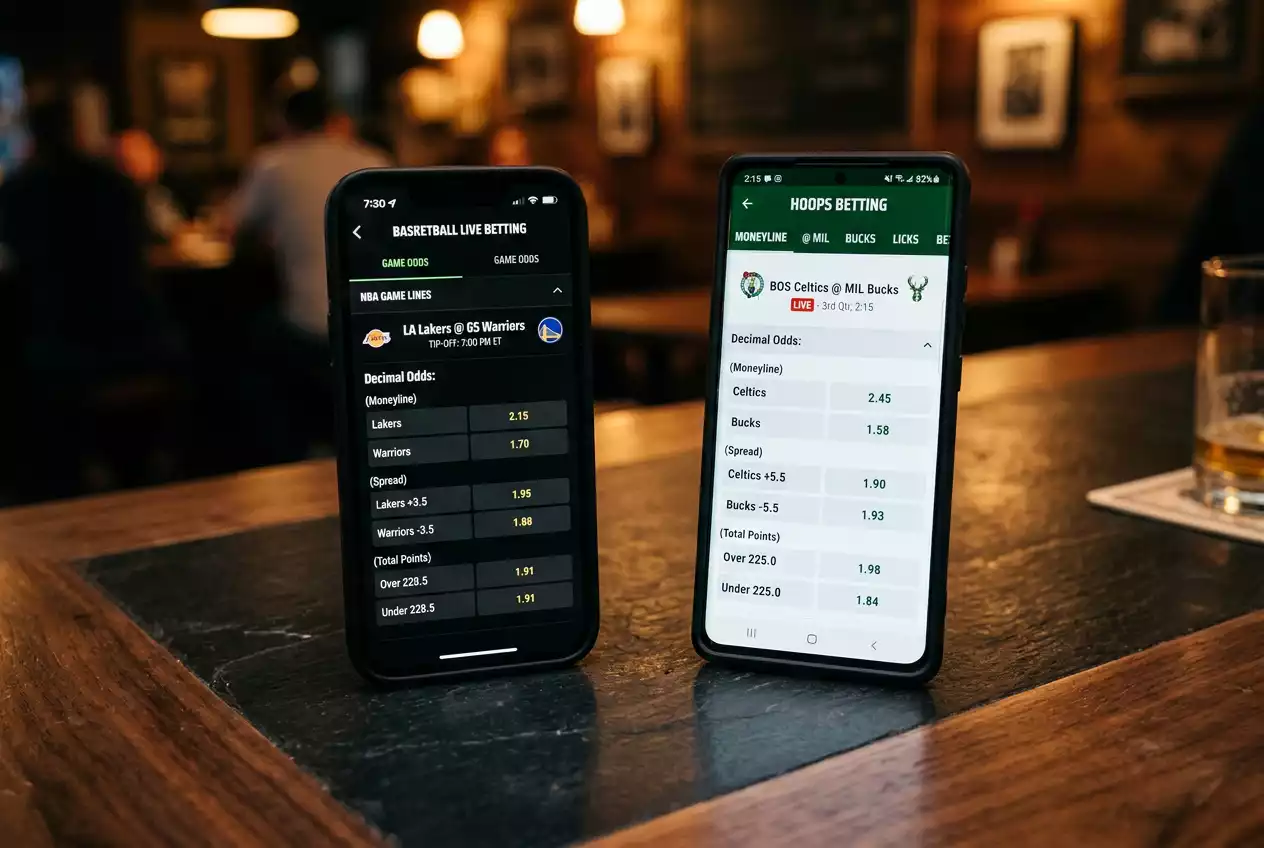
Step two: I open the same game on three or four operator apps and note the decimal odds on the side I want. The variation is typically 0.02 to 0.08 on spread markets and 0.05 to 0.15 on moneyline markets. Props show the widest variation — I have seen differences of 0.20 or more on the same player prop across UK bookmakers.
Step three: I place the bet at the best price. If two operators are tied, I use the one with fewer restrictions on my account. If the best price is at an operator where my account is limited, I take the second-best price and note the shortfall for my records.
Flutter Entertainment, whose brands include some of the UK’s most prominent betting platforms, posted $15.91 billion in group revenue for 2025 — a 17% increase year on year. That growth is funded in part by the margin differential between what recreational bettors accept and what they could get by shopping. Every pound of that margin that you avoid paying is a pound that stays in your bankroll.
Calculating and Comparing Bookmaker Overround
The overround — the built-in margin on a market — is the single best metric for comparing bookmaker value on a given game. To calculate it, convert each side’s decimal odds to implied probability (1 divided by the odds), add them together, and subtract 100%. The result is the operator’s margin on that market.
A spread market priced at 1.91/1.91 has an overround of 4.72%. The same market at 1.93/1.93 has an overround of 3.63%. That 1.09-percentage-point difference means the second operator is offering a fairer market, and over a season of betting you will retain more of your edge at the second price. I calculate the overround on every market I bet and log it alongside my bet record. At the end of each month, I review which operators consistently offered the tightest margins and adjust my default bookmaker hierarchy accordingly.
Overrounds vary by market type. NBA spread and moneyline markets at major UK operators typically carry overrounds between 4% and 6%. Totals are similar. Player props often carry 7% to 10%, and same-game parlays can exceed 15%. Knowing these ranges sets your expectations: a 4.5% overround on a spread is competitive; a 4.5% overround on a prop would be excellent.
When Line-Shopping Matters Most: Props, Totals and Live
Not all markets reward line-shopping equally. On the main spread, where competition between operators is fiercest, the price variation is narrowest. The incremental gain from shopping a spread bet is real but modest — typically 0.02 to 0.05 in decimal odds. On props and alternative totals, where operators’ models diverge more and competition is less intense, the gains are significantly larger.
I focus my line-shopping effort on props first, totals second, and spreads third. A player-points prop priced at 1.80 on one operator and 1.90 on another represents a 5.5% difference in potential return on the same bet. That is not a rounding error; it is a material advantage that accumulates across a season of prop betting.
Live betting is the frontier of line-shopping, and it is genuinely difficult. In-play odds update every few seconds, and by the time you toggle between two apps, the price may have moved. I do not actively line-shop live bets in real time. Instead, I identify before the game which operator tends to offer the best live NBA prices and default to that platform for in-play activity. Over time, the pattern becomes clear: one or two operators consistently lead on live NBA spreads, and routing your in-play bets through them saves you the hassle of game-time comparison.
For a detailed breakdown of how different UK bookmakers handle NBA coverage, I have a separate guide. The short version: maintain three to four active accounts, check odds before every bet, and treat the five minutes of comparison as the highest-ROI activity in your betting process.
How much can NBA odds vary between UK bookmakers?
On spread markets, the variation is typically 0.02 to 0.08 in decimal odds. Moneyline markets show wider gaps of 0.05 to 0.15. Player props produce the largest variation, with differences of 0.10 to 0.20 or more on the same market. Over a season of regular betting, these differences compound into hundreds of pounds of additional profit or avoided losses.
Is it worth having multiple UK betting accounts for NBA line-shopping?
Yes. Maintaining three to four accounts with UKGC-licensed operators is the single most effective way to improve your long-term returns without changing your analytical process. The five minutes spent comparing odds before each bet produces a higher return per hour of effort than almost any other aspect of sports betting research.
Published by the Betting Tips nba team.