NBA First-Half Betting Strategy: Why Half-Time Markets Deserve Attention
 Available in US
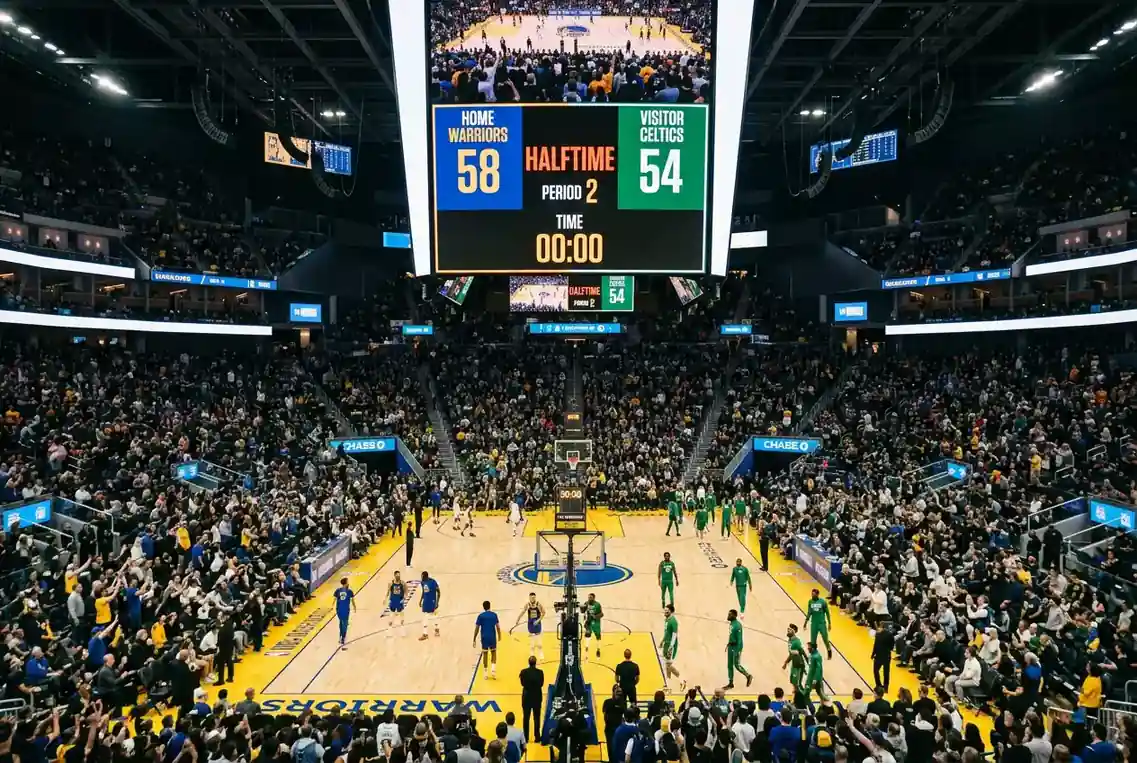
First-Half Lines Remove the Noise of Fourth-Quarter Variance
I stumbled onto first-half betting by accident. My full-game spread model was profitable, but the variance was punishing — close losses in the fourth quarter from intentional fouling, garbage-time runs and bizarre officiating decisions that had nothing to do with which team was better. One evening I ran the numbers on just the first-half outcomes and discovered my model was significantly more accurate when measured against the first-half spread than the full-game spread. The fourth quarter was adding noise, not signal.
García and colleagues documented a performance decline between the first and fourth quarters with an effect size of -1.27. That decline does not affect both teams equally, and the unevenness introduces variance into the full-game outcome that is largely absent in the first half. By halftime, starters have played 18 to 22 minutes, fatigue has not yet become a dominant factor, and the game script has not diverged into blowout or comeback territory. The first half is the cleanest read on relative team quality in any given game.
For UK punters, first-half bets have a practical advantage: they settle at halftime, roughly 75 minutes after tip-off. If a game tips at midnight GMT, your first-half bet settles by 1:15am. You can place your bet during the evening, check the result before going to sleep, and avoid the 3am anxiety of waiting for a fourth-quarter collapse to determine whether your full-game bet cashes.
How Bookmakers Calculate NBA First-Half Lines
The standard approach is mechanical: divide the full-game spread by two and round to the nearest half-point, then set the first-half total at roughly 48 to 52% of the full-game total. A game with a full-game spread of -8 becomes approximately -4 for the first half. A full-game total of 224 becomes approximately 110 to 112 for the first half.
That mechanical derivation is where the value lives. Not all teams perform proportionally in the first half. Some are notorious fast starters that build leads early and then coast; their first-half margin regularly exceeds half their full-game margin. Others are slow starters that trail at the break and rely on second-half adjustments to close the gap. The bookmaker’s derived line treats every team as if its first-half performance is a scaled-down version of its full-game performance, and that assumption is wrong often enough to be exploitable.
I maintain a database tracking each team’s first-half spread performance relative to the full-game spread. The deviation is consistent across seasons: certain teams routinely outperform their first-half derived line by 1 to 2 points, while others underperform by a similar margin. That 1-to-2-point gap flips a significant number of first-half bets from one side of the spread to the other, and it persists because the bookmaker’s derivation model does not incorporate team-specific first-half tendencies.
Three First-Half Angles Backed by Pace and Fatigue Data
My three most productive first-half angles all relate to how specific matchup dynamics manifest before halftime, when the game state is cleanest.
The first is the pace-mismatch under. When a top-ten pace team faces a bottom-ten pace team, the first half typically plays closer to the slower team’s tempo. The aggressive, transition-heavy style of the fast team is blunted by the slow team’s half-court discipline, and the first-half total lands below the bookmaker’s derived number. In the 2025-26 season, team pace and shooting efficiency continue to drive totals, but the interaction between mismatched tempos is most pronounced in the first half before either team makes strategic adjustments.
The second is backing fast-starting teams on the first-half spread. Teams that consistently outperform their first-half derived line — typically squads with strong opening offensive scripts and starters who play heavy early minutes — offer a structural edge because the bookmaker’s line does not account for their tendency to build early leads. I filter for teams whose first-half margin exceeds their full-game margin by 1.5 points or more across the current season and back them on the first-half spread when the derived line does not reflect this tendency.
The third angle targets the first-half total in back-to-back situations. Wang and colleagues found that 19% of NBA games are within ten points entering the fourth quarter, but back-to-back games diverge from this pattern because fatigued teams often start slowly. When a team on the second night of a back-to-back tips off against a rested opponent, the first-half total tends to run low because the tired team’s energy deficit is most visible early in the game, before adrenaline and competitive intensity compensate. I lean towards first-half unders in these spots, particularly when the fatigued team is on the road.
UK Bookmaker Coverage of NBA Half-Time Markets
Most major UK-licensed operators offer first-half spread and totals for every NBA game. Coverage of individual-quarter lines and second-half markets is less consistent — some operators provide them, others do not. If first-half betting is part of your strategy, verify that your primary operator offers these markets before committing to the approach.
The margins on first-half markets are typically slightly wider than full-game markets — an overround of 5 to 6% compared with 4 to 5% on the full-game spread. That wider margin means you need a slightly larger edge to break even, but the mispricing from the mechanical derivation offsets this for bettors who track team-specific first-half tendencies.
One workflow consideration: first-half lines are often posted later than full-game lines on UK platforms. While the full-game spread might be available by early afternoon GMT, first-half lines sometimes appear only two to three hours before tip-off. This compresses your analysis window, so I recommend running your first-half model during the UK evening alongside your full-game analysis and setting price alerts or checking back closer to game time to confirm the line. For more on how live dynamics extend beyond the first half, my in-play strategy guide covers the second-half and fourth-quarter angles.
Are NBA first-half lines softer than full-game lines?
First-half lines are derived mechanically from the full-game spread and total, typically by dividing by two and rounding. This derivation does not account for team-specific first-half tendencies, creating mispricing when a team consistently outperforms or underperforms its derived line. The margin on first-half markets is slightly wider than full-game, but the mispricing from the mechanical derivation can more than offset it.
Which UK bookmakers offer NBA first-half spread and totals markets?
Most major UKGC-licensed operators offer first-half spread and totals for every NBA game. Individual-quarter and second-half markets are less consistently available and vary by operator. Check your preferred platform’s NBA coverage on a live game day to verify which half-time and quarter markets are offered before building a strategy around them.
Created by the ”Betting Tips nba” editorial team.