NBA Home Court Advantage: Betting Spread Value
 Available in US

Shrinking Home Court Impact: Adjusting ATS Models
For years I priced NBA home-court advantage at roughly 3 points on the spread, because that is what the textbooks said and what the data supported through the 2010s. Then the bubble seasons happened, attendance fluctuated, and I started noticing my model was overcrediting home teams. The advantage is still real, but it has compressed, and bettors who have not updated their mental model are giving away edge.
Five-season moneyline data tells the story in hard numbers. Home favourites win 68.96% of the time outright, while away favourites win 66.47%. That gap — roughly 2.5 percentage points — is meaningful but smaller than the 4-to-5-point gap that characterised earlier eras. The market has adjusted, partly, but public perception lags. Recreational bettors still overvalue home court, which creates opportunities for those willing to back road teams in the right spots.
Several forces are compressing the advantage. Modern NBA travel is more comfortable than it was a decade ago — charter flights, private terminals, in-flight recovery protocols. Analytics have also levelled the playing field: visiting teams arrive with detailed scouting packages that neutralise much of the home team’s schematic edge. And the rise of three-point shooting has reduced the impact of crowd noise on shooting efficiency, because perimeter shots are less affected by arena conditions than contested drives to the basket.
The value of playing at home changes drastically when you factor in fatigue and NBA back-to-back games data into your predictive models.
Five-Season Home and Away Win Rates by Favourite Status
I pulled the numbers myself rather than relying on secondhand summaries, and the breakdown is worth sitting with for a moment. Over the last five regular seasons, NBA favourites won 67.98% of all games outright. Split by venue, home favourites hit 68.96% and away favourites 66.47%. On the underdog side, home underdogs won outright 33.53% of the time versus 31.04% for road underdogs.
What jumps out is not the direction — everyone knows home teams do better — but the magnitude. The home-road split for favourites is barely 2.5 percentage points. For underdogs, it is about the same. In spread terms, that translates to roughly 1.5 to 2.5 points of home-court value, depending on the season and how you weight recent data. If your model is still using a 3-point home adjustment, you are systematically mispricing road teams.
The variance across teams is enormous. A squad like Denver, playing at altitude with a raucous home crowd, still commands a legitimate 3-to-4-point home edge. A team like the Clippers, historically playing in a shared arena with lukewarm atmosphere, might warrant barely a point. Blanket adjustments miss these differences, and the best edges come from calibrating home-court value at the team level rather than applying a league-wide constant.
How Bookmakers Incorporate Home Court into Spreads
Bookmakers do not publish their home-court adjustment factors, but you can reverse-engineer them by comparing the same matchup at different venues across a season. When I tracked this over three seasons, I found that the average UK-licensed bookmaker bakes in roughly 2 to 2.5 points of home-court value — right in line with the recent data. That is a meaningful shift from the 3-point default that prevailed a decade ago, and bettors still anchored to the old number are systematically mispricing road teams.
The adjustment is not static within a game week. Early-week lines tend to lean slightly heavier on home court, and by tip-off the market has usually corrected through sharp action. If you bet early in the week, you are more likely to encounter a line that overvalues home court than if you wait until an hour before the game. I have found value in betting road teams on Monday or Tuesday for games tipping off on Wednesday or Thursday, locking in a number before the sharps compress it.
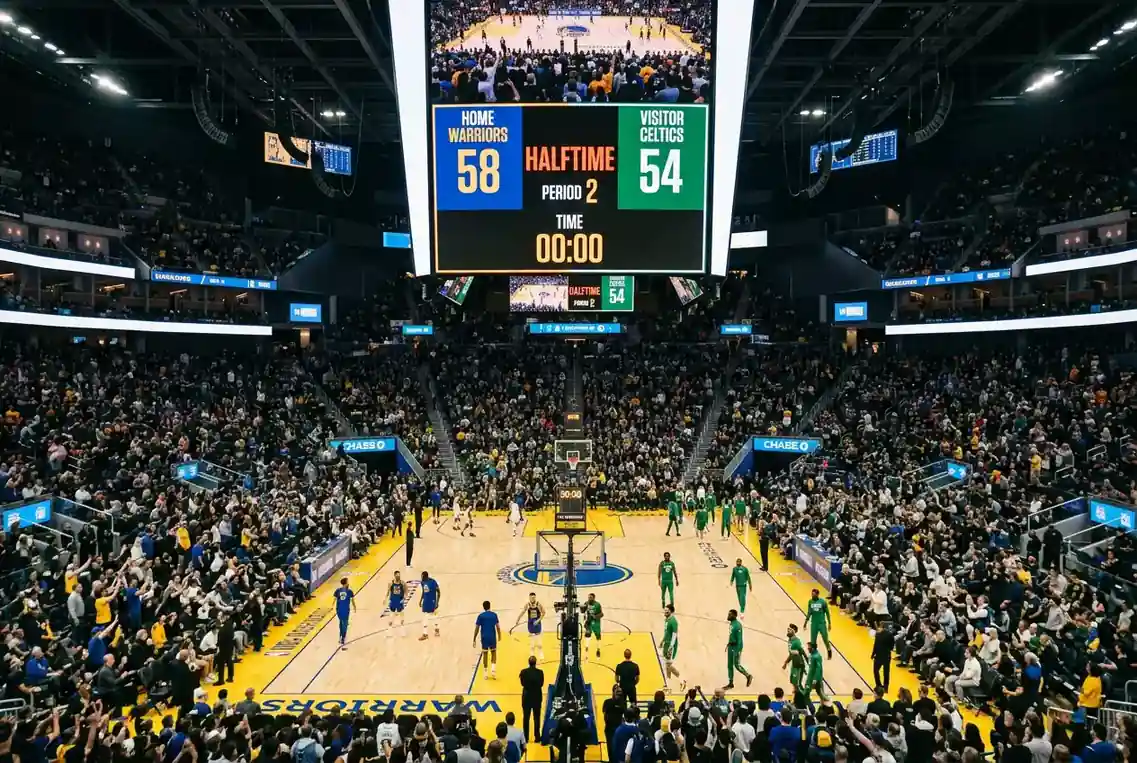
Where bookmakers still overprice home court most obviously is in nationally televised games featuring marquee home teams. When the Warriors host a weekend game on Sky Sports, the public money flooding in on Golden State’s side inflates the spread beyond what home-court data alone justifies. That public bias toward favourites layers on top of the home-court adjustment, creating a compounded overpricing that benefits the road side. I have made this my primary angle for road-team bets: wait for a nationally televised home favourite, check whether the spread has moved more than a point from the opener, and consider the road side if the movement lacks a news catalyst.
When Home Court Still Matters: Altitude, Crowd and Playoffs
I do not want to leave the impression that home court is irrelevant — it absolutely is not. The trick is knowing when it still carries outsized weight, because those are the spots where the market might actually underprice the home team.
Access comprehensive scheduling analysis directly on the data-driven NBA predictions homepage.
Altitude is the clearest example. Denver’s home record over the past five seasons is significantly better than the league average, and visiting teams consistently underperform their road averages when playing at elevation. The physiological effect is real: lower oxygen levels reduce aerobic capacity, which hits visiting players harder in the second half as accumulated fatigue compounds the altitude disadvantage. I add an extra half-point to full point for altitude games on top of my standard home adjustment.
Playoff home court is a different animal entirely. The regular-season data showing a compressed advantage does not carry over cleanly to the postseason. Arenas are louder, stakes are higher, and the officiating environment shifts. Home teams in playoff series historically outperform their regular-season home splits, and the spread market sometimes underprices this because it anchors on regular-season data. I am more willing to back home teams in the playoffs than during the regular season, particularly in games 1 and 2 when the home crowd is at peak intensity.
The crowd factor itself is hard to quantify but impossible to ignore. There is a reason the NBA invested heavily in fan-experience upgrades during the new media-rights cycle that kicked off in 2025-26. Teams that have built genuine home-court cultures — Milwaukee, Denver, Boston — still derive measurable edge from their arenas. Teams in markets with transient fan bases or corporate-heavy crowds see much less benefit. When I evaluate home-court advantage, I weight crowd quality alongside the raw venue data, and the two do not always align.
How many points is NBA home court advantage worth on the spread?
Current data puts NBA home-court advantage at roughly 1.5 to 2.5 points on the spread, down from the 3-point standard that held through much of the 2010s. The exact figure varies by team — Denver at altitude might warrant 3 to 4 points, while a team in a quieter arena might justify barely 1. Using a single league-wide number leaves value on the table.
Has NBA home court advantage declined since the pandemic?
The decline began before the pandemic but accelerated during and after the bubble seasons. Improved travel conditions, deeper analytics-driven scouting and the rise of three-point shooting have all compressed the gap. The bubble years, played without fans, demonstrated that crowd noise alone accounted for a meaningful portion of the advantage, and not all arenas have recovered the same atmosphere since.
Written by the editors at Betting Tips nba.